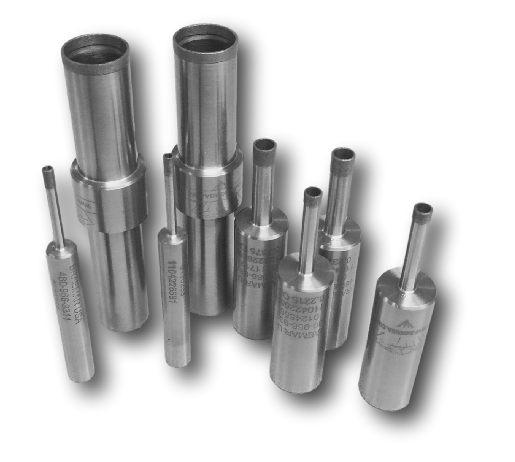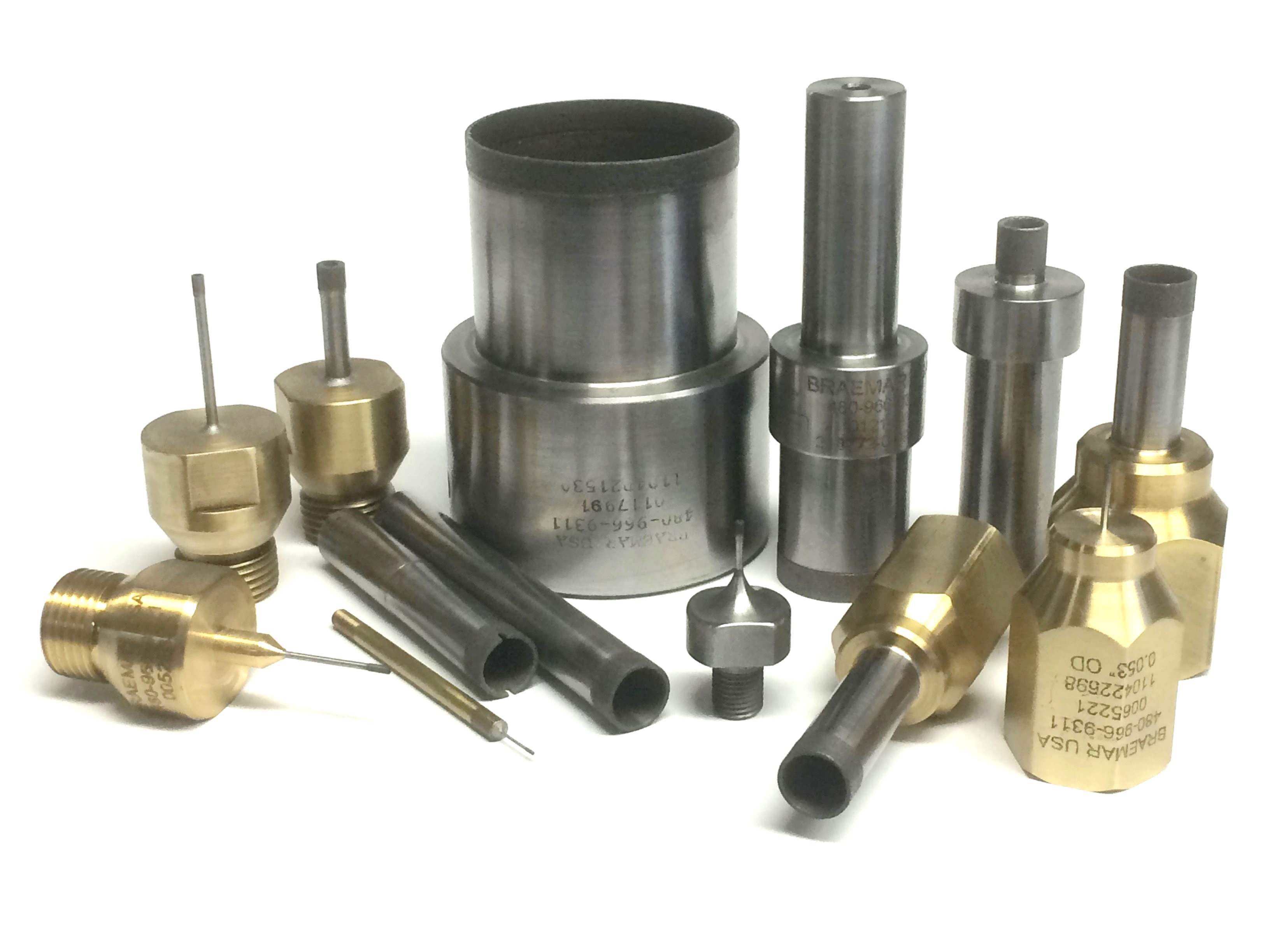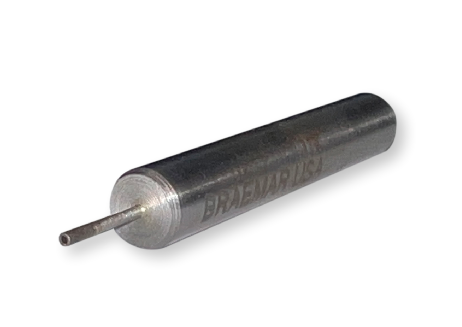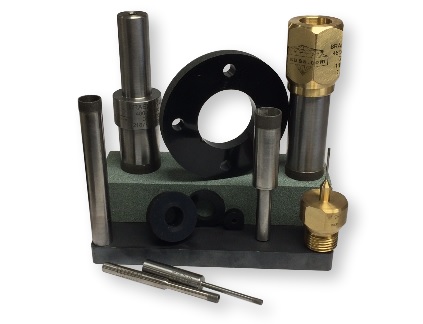
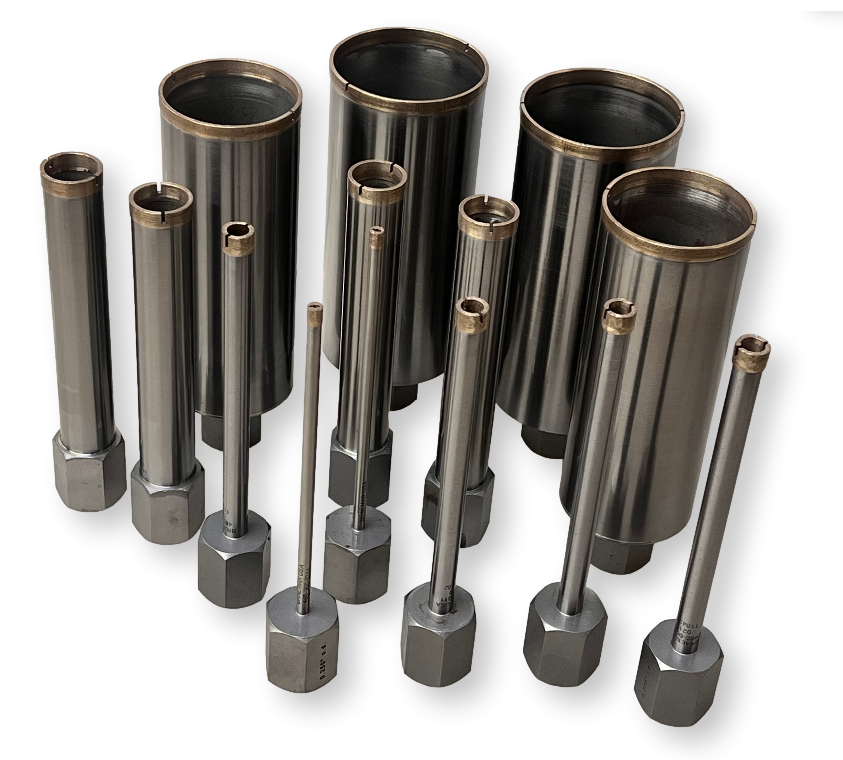
Diamond Core Drills For Ceramics
Diamond core drills for ceramics are designed to cut clean, precise holes in a very hard, brittle materials. Drilling alumina, zirconia, silicon nitride, silicon carbide are very hard and brittle so it requires diamond tooling to avoid cracking, chipping.
Diamonds are embedded in a sintered metal matrix.
Longer tool life, more durable for continuous or production drilling.
Suitable for large diameters and deep hole drilling in ceramic.
Require proper coolant to prevent glazing and overheating.
Requirements for Ceramic Drilling
Coolant: Always use coolant through the drill to reduce heat and prevent cracks.
Speed: Run at moderate RPM (varies with drill size: small drills = higher RPM, large drills = lower RPM).
Feed Pressure: Light pressure—let the diamond cut. Excess force causes edge chipping.
Start Technique: Prevent drill from dancing on top of the material, use guides or a starter hole.
Wall Thickness: Thinner-walled drills reduce heat and improve cutting efficiency on ceramics.
Coolant channels for continuous coolant flow.
Electronics & Technology
Semiconductors – substrates, insulators, and packaging.
Piezoelectric ceramics – sensors, actuators, ultrasound devices.
Superconductors – high-temperature superconducting ceramics.
Dielectrics – capacitors and circuit boards.
Medical & Dental
Dental implants and crowns – zirconia, alumina.
Bone substitutes and prosthetics – biocompatible ceramics like hydroxyapatite.
Surgical tools and joint replacements – wear-resistant ceramics.
Aerospace & Defense
Thermal protection systems – heat shields on spacecraft (silica tiles, advanced composites).
Armor – ceramic body armor plates, vehicle armor (boron carbide, alumina).
Turbine components – ceramic matrix composites for jet engines.
Call (480) 966-9311 or Add to Quote for pricing.