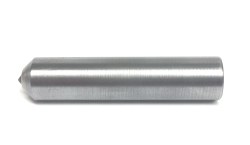
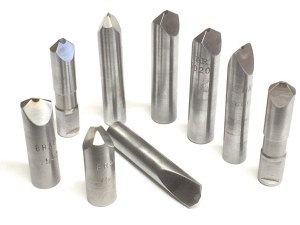
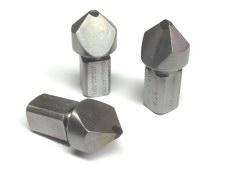
Using Single Point Diamond Dressers
Using a single-point diamond dresser correctly helps restore grinding-wheel geometry, expose fresh abrasive grains, and maintain consistent grinding performance. These precision dressing tools are commonly used for truing and dressing conventional aluminum oxide and silicon carbide grinding wheels in surface, cylindrical, centerless, and precision grinding operations.
For best results, mount the diamond dresser securely and position the diamond point slightly off-center at a 10- to 15-degree trailing angle to the wheel’s direction of rotation. Apply coolant before the diamond contacts the wheel, then use light, consistent infeed and a smooth traverse across the entire wheel face. Avoid heavy cuts, sudden contact, or excessive heat, which can damage the diamond and shorten tool life.
The dresser’s traverse rate also affects wheel performance. A slower traverse produces a smoother wheel surface for fine finishes, while a faster traverse creates a more open, aggressive surface for increased material removal. Periodically rotating the dresser in its holder exposes a fresh diamond edge, distributes wear evenly, and extends usable tool life.
Properly using a single-point diamond dresser improves wheel sharpness, profile accuracy, surface finish, and part consistency. Regular dressing also helps reduce wheel loading, grinding forces, vibration, chatter, and heat buildup, resulting in more efficient grinding and longer abrasive-wheel life.
Correct procedure
Inspect the grinding wheel and dresser
Confirm that the wheel is properly mounted, guarded, and rated for the machine speed.
Examine the diamond point for excessive wear, cracks, or looseness.
Never attempt to dress a damaged grinding wheel.
Mount the dresser rigidly
Clamp the dresser as close to the diamond as practical to minimize overhang and vibration.
Position the diamond point at the wheel’s centerline.
Set the dresser at a 5° to 15° drag angle—not a leading angle. A rigid mounting and correct angle help prevent chatter and premature diamond failure.
Position the dresser before starting
Begin slightly beyond one edge of the wheel face.
Make sure the dresser can travel completely across the wheel without hitting the flange, guard, or machine components.
Stand clear of the wheel’s direct operating plane when starting the grinder.
Start the wheel and coolant
Bring the wheel to operating speed.
If dressing wet, establish a steady coolant flow before the diamond contacts the wheel. Do not apply coolant after a dry diamond has become hot because sudden cooling may damage it.
Coolant should be directed at the contact point throughout dressing. Norton also recommends using coolant during stationary-tool dressing.
Use a light initial infeed
Advance the diamond until it just touches the highest point on the wheel.
Move the dresser clear, then apply a light, controlled infeed.
The exact amount depends on wheel grit, bond, condition, machine rigidity, and desired finish. Avoid aggressive cuts unless specifically recommended for the application.
Traverse smoothly across the wheel
Move continuously across the entire wheel face at a uniform rate.
Do not stop or dwell while the diamond is in contact; dwelling can create grooves and overheat the diamond.
Continue making light passes until the wheel runs true and the entire face has been dressed.
Call (480) 966-9311 or Add to Quote for pricing.