Products
Shop our wide selection of products
Browse By Category
- Resin Bond Diamond Wheels
- Resin bond CBN wheels
- Electroplated Diamond Wheels
- Electroplated CBN Wheels
- Metal Bond Diamond Tools
- Diamond Core Drills
- Water Swivels
- Diamond Optical Tools
- Diamond Dressing Tools
- Diamond Bandsaw Blades
- Flexible Diamond Tools
- Information
- Monoset Diamond Wheels
- Diamond Ewag Wheels
- Diamond Lapping Compound
- Cutoff Wheels
- Diamond Threaded Countersinks
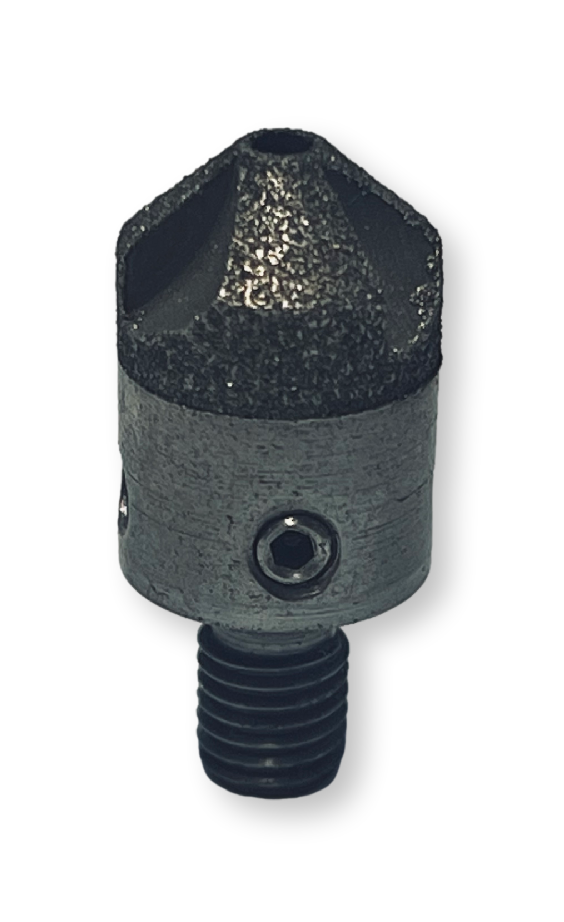
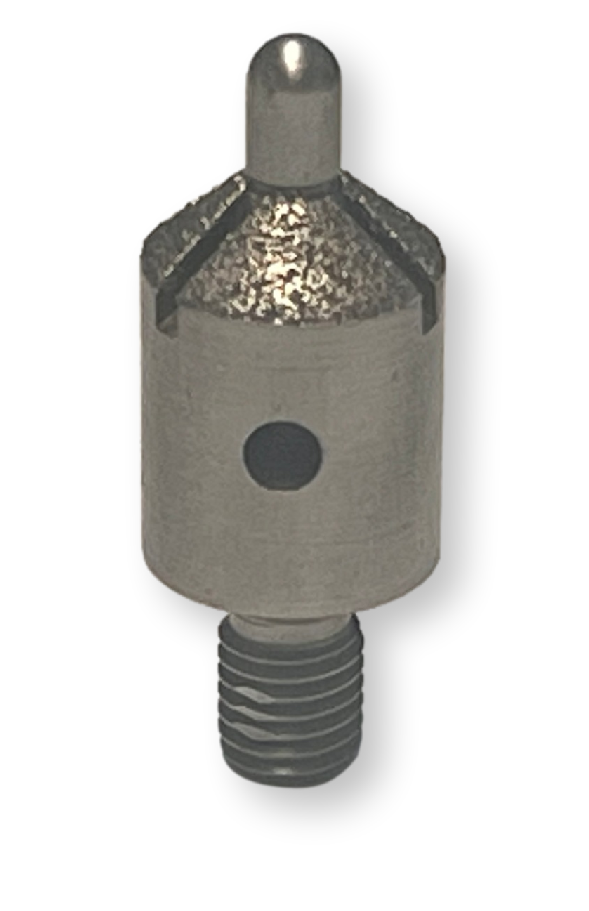
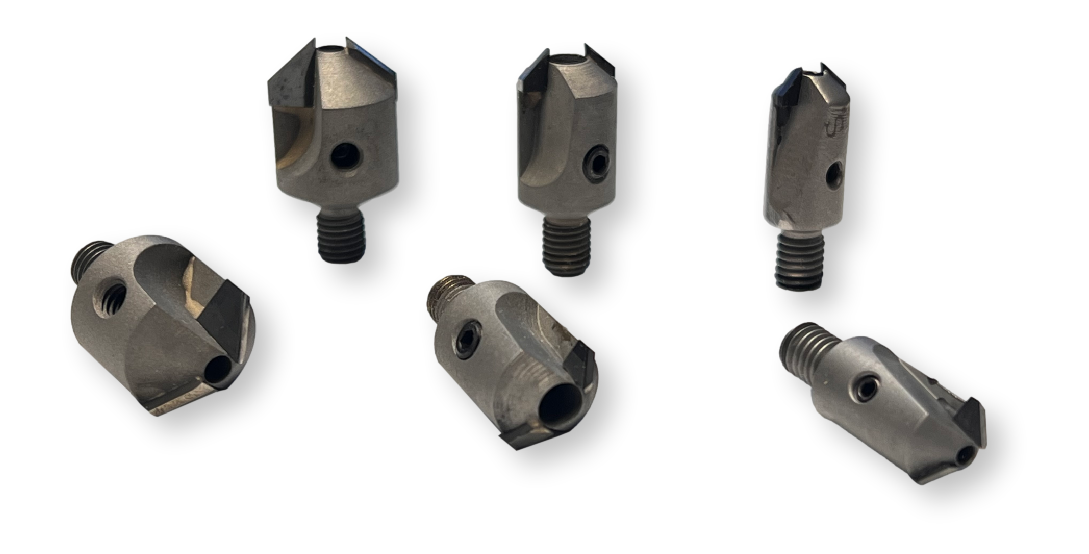
Diamond Threaded Countersinks
Countersinking operations in aerospace structures place unique demands on cutting tools. For holes measuring 3/16 inch in diameter and larger, the countersink must produce accurate chamfer geometry for 100° and 130° fasteners without inducing delamination, fiber pull-out, thermal degradation, or chatter marks. These issues increase significantly when machining graphite-epoxy laminates, titanium alloys, aluminum, or other abrasive composite and metallic materials used in modern airframes. Graphite-epoxy stacks create abrasive wear modes that dull conventional carbide or HSS countersinks at a rapid rate. Consequently, tool life decreases, dimensional consistency degrades, and the cost per hole increases. Wrought and cast materials generate different challenges. For example, high-strength aluminum alloys cut cleanly but require tight control of surface quality to support reliable fastener seating. Titanium alloys resist cutting and produce heat, which can compromise cutter edges and degrade hole geometry. Composite-metal stackups introduce yet another variable, since each layer interacts with the cutting edge differently. To address these machining problems, specialized countersinks are engineered to maintain edge integrity while reducing heat generation and abrasive wear. Although the fastener angle determines the chamfer geometry, the substrate determines the optimal cutting edge material and tool configuration. As a result, aerospace assembly operations frequently rely on diamond-based cutting edges, PCD tooling, or plated configurations to achieve predictable tool life and consistent surface finishes over long production runs. Airframe assembly requires consistent countersink geometry because fasteners must seat with uniform bearing stress and minimal gap formation. When surface finish quality improves, the fastener interface becomes more stable, which strengthens both joint integrity and long-term structural performance. Moreover, the reduction in tool wear lowers the cost of machining abrasive composite materials. Therefore, specialized countersinking tools provide both dimensional control and improved process economics in demanding aerospace environments.